
Investor Guide & FAQ
A few things worth understanding before you buy your first investment property.
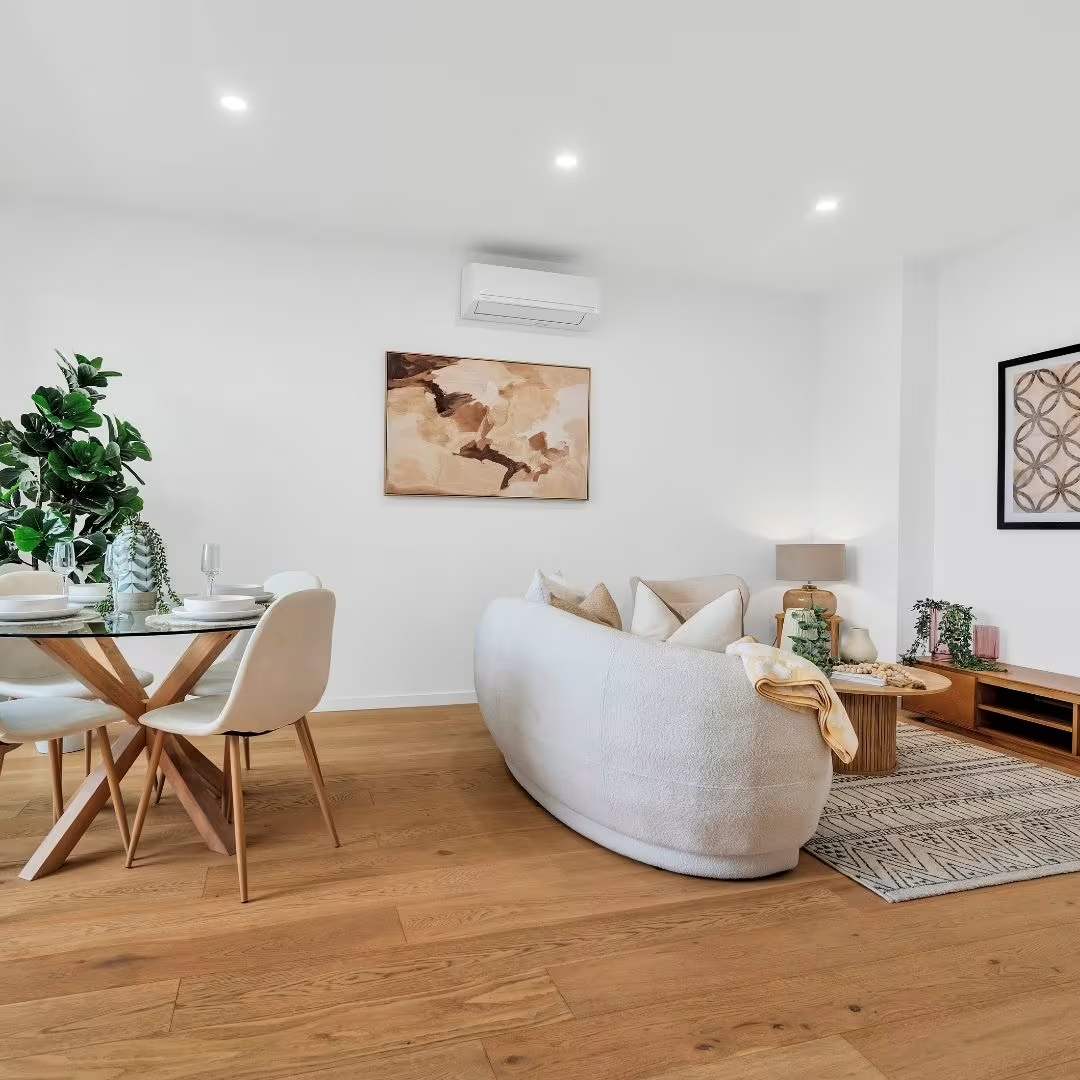
Investor guide.
Seven things to understand before you choose your next property.

Capital growth is how much a property's value increases over time. Yield is the rental income it generates, shown as a percentage of the purchase price. Most properties lean toward one or the other. Knowing which one your strategy needs changes which properties you should even be looking at.
Loan-to-Value Ratio is the size of your loan compared to the property's value. A lower LVR usually means a bigger deposit but less risk and often a better interest rate. It's one of the first numbers your lender will look at.
Building and pest inspections, title checks, comparable sales, council zoning. None of it is exciting. All of it is the difference between a good buy and an expensive mistake. We build this into every deal before it ever reaches you.
Realistic end values, realistic rents, a contingency on every estimate. We'd rather miss a deal than talk you into one.
On-market properties are listed publicly and open to competing buyers. Off-market properties are sold directly by the owner before public listing, meaning less competition and often a better price. We work both, depending on what fits your brief.
A real estate agent works for the seller. Their job is to get the highest price, for the seller. A buyer's agent works only for you, the buyer. Different job, different loyalty.
One property is a start. A portfolio is a plan. We help you think about how each purchase sets up the next one, not just whether today's deal looks good in isolation.
Frequently asked questions.
Clear answers, before you sign on or make a decision.
Still have a question?
Email buyers@corbygroup.com. We come back to you directly, no chatbots, no ticketing system, no waiting a week.
About Charlie Property
We're a property company that buys off-market and under value, renovates properly and economically, and puts homes back into the rental supply. The buyers agency is that same eye for a deal, pointed at finding your next property instead of ours.
Charles is the founder of Charlie Property and the person you'll see in our videos and webinars. He built the company around one instinct: doing things differently isn't a liability, it's the whole advantage.
We work both sides of the market, off-market and on-market, flip or hold. We bring you deals with the numbers already run, not a shortlist of listings. And we keep client numbers small, so every deal is properly assessed and every client gets our full attention.
Australia-wide. We go where the deals are, guided by your Buyer Brief. Geography isn't the constraint, deal quality is.
Yes. Plenty of our clients are buying their first investment property. The discovery call and the Investor Guide above exist for exactly that reason.
About the service
We find, assess, negotiate and secure property on your behalf. That means working out what you should buy, going and finding it (on-market or off), running the due diligence and the numbers, negotiating the price, and getting you through to settlement. You make the decisions, we do the legwork.
The selling agent is paid by the vendor to get the highest price. Nobody in that transaction is working for you. We are. We also see deals before they're advertised, which is where most of the margin lives.
You. Only you. We don't take fees from vendors or selling agents, and we don't get paid more if you pay more.
Yes, that's the core of what we do. We go direct to owners and lean on years of agent relationships to find properties before they hit a portal. For everything else, we search the open market with the same rigour.
Always. We bring you the property, the numbers and our honest read. Whether to proceed is your call, every time.
Deal sourcing is us going direct to owners to find off-market flip and buy-renovate-hold opportunities with the upside built in. Standard buying is us acting as your buyer's agent for an established property, on-market or off, with no renovation project attached. Both start with the same discovery call and Buyer Brief.
That's exactly what our standard buy and hold path covers. Tell us your budget, target yield or growth, and preferred locations, and we source and negotiate on your behalf.
Up to five, all within your Buyer Brief. We're not a search portal. Every property we bring has been assessed and chosen because it matches what you told us you're looking for.
Finding the right property
It starts with the discovery call, then your Buyer Brief: your strategy, budget, timing, target areas, how hands-on you want to be, and the return you need. That brief becomes our sourcing guide, so everything we bring you actually fits.
Direct-to-owner outreach, agent relationships built over years, our own data on suburbs and streets, and yes, the portals too. Most of the work happens before a property is ever advertised.
No. The portals are the last place we look, not the first. By the time something is listed, competition has usually eaten the margin. We still check them, because occasionally a good deal slips through, but they're not where most of our deals come from.
Yes. It's what we're known for. Off-market means no portals, no ads, just direct relationships and private conversations, which usually means less competition and a better price.
Yes. Plenty of our clients are buying their first investment property. The discovery call and the Investor Guide above exist for exactly that reason.
Against your Buyer Brief first, then against the numbers: price versus real value, upside from renovation or growth, rental yield, risk, and how easily you could exit. Two properties can look identical on a listing and be very different deals.
Recent comparable sales, what it would rent for, what it would be worth after any work, and what similar properties cost to replace or build. We use conservative assumptions, and we'd rather miss a deal than talk ourselves into one.
Yes, but tell us in writing the moment anything changes. We source off what's on paper, so if a property matches your original brief but not your updated (undisclosed) criteria, it still counts as one of your five introductions.
If we show you something out-of-brief because it's genuinely exceptional, we'll say so up front. It won't count as one of your five, and there's no fee consequence if you pass.
Due diligence & valuation
Comparable sales first, then rental yield, land value and condition, then what it's worth after any work is done. We stress-test the number, and we set it before we ever talk price with a vendor.
Recent sales, ideally within the last three to six months, in the same suburb or pocket, with similar land size, dwelling type and condition. We adjust for the differences rather than pretending they don't exist.
We widen the net: a longer time window, neighbouring suburbs with a similar profile, and rental yield as a second check. Then we lean conservative. Fewer comparables means more margin for error, so we price that in.
Same principle, wider lens. We look at comparable towns, talk to local agents and property managers, check rental demand and vacancy, and pay close attention to what's driving the local economy. If we can't get comfortable with the value, we don't bring it to you.
Layout, structure, and what's cosmetic versus structural. We look at what the finished product would sell or rent for in that street, what it costs to get there, and whether council constraints get in the way. The best renovations are usually the boring ones: kitchen, bathroom, paint, floors.
Building and pest as a minimum, every time. Depending on the property: electrical, plumbing, pool, a strata report, or a specialist report if something specific worries us.
We can coordinate them for you and tell you who we trust. You engage and pay the inspector directly, so the report is yours and the advice is independent.
We go back to the vendor to renegotiate, or we walk. A material issue uncovered in due diligence is a legitimate reason to pass, and we'd rather lose a deal than have you inherit someone else's problem.
We check council records for approvals. Anything unapproved is treated as zero value in the numbers until proven otherwise, and we factor in the cost to rectify or approve it. If that kills the deal, it kills the deal.
Investment & renovation strategy
Line by line from the scope, using current trade rates and quotes where we can get them, plus a contingency on top. We'd rather the estimate look boring and be right.
Comparable sales of renovated properties in the same area, similar size and finish. We use the realistic figure, not the best-case one.
End value (sale price or valuation) minus everything it takes to get there: purchase price, stamp duty and buying costs, renovation, holding costs, selling costs and our fee. Projected profit is an estimate, not a guarantee, and we model it to protect the downside.
The increase in value you create through renovation, not by waiting for the market to move. Buy for $400k, spend $50k renovating, and the property is now worth $520k: you've manufactured $70k in equity. The market didn't do that for you.
That's what the contingency is for, and why scope discipline matters. If a blowout is on the cards, we'd rather you know early. We also stress-test every deal so a reasonable overrun doesn't turn a good deal into a bad one.
The maximum price comes from the numbers, and it's set before negotiation starts. We don't move it because a vendor is stubborn or another buyer turns up. If it doesn't stack up, we walk and keep sourcing.
Negotiation & acquisition
From the numbers: what the property is worth today, what it could be worth after any work, and the return you need. That gives us a ceiling, and we negotiate down from the market, not up from the asking price.
Yes, for on-market properties. For off-market deals we're usually dealing directly with the owner. Either way, you're not the one in the room haggling.
We don't chase a deal past the point where the numbers work. If the vendor won't meet a price that stacks up, we walk and keep sourcing. There's always another property.
Yes, and we do it regularly. We're not paid to get you into a property, we're paid to get you into the right one.
You do. We give you our honest read, the numbers and a recommendation. The decision is yours.
96 hours: 72 hours to inspect and do your due diligence, then 24 hours to sign the Contract of Sale or pass. The deals we source are discounted because we move fast. If we sit on something, someone else moves on it.
You can pass, but it counts as one of your five introductions. A legitimate reason to pass is the property not matching a criterion in your Buyer Brief, due diligence uncovering something material, the price being above your approved finance, or a qualified professional flagging a material issue in writing. Put it in writing within the 96-hour window. Changing your mind or wanting to keep looking doesn't count.
Fees & process
There are two parts. A minimal Commitment Fee (+ GST) when you sign on, which covers the sourcing work. Then an Introduction Fee when you buy, based on the projected profit of the deal, not the purchase price. We build it into the feasibility so it's not taken out of the end.
The Commitment Fee when you sign the Deal Introduction Agreement. The Introduction Fee is triggered when you sign the Contract of Sale and payable at unconditional contract or settlement, we'll confirm which at the time.
Your own due diligence and legal costs (building and pest, solicitor or conveyancer), stamp duty and lender costs, and renovation and holding costs if the deal involves work. We build the major ones into the feasibility so there are no surprises.
The discovery call to sign-on usually takes days, not weeks. Sourcing depends on your brief and the market. Once we present a property you have 96 hours to decide, and settlement then follows the contract terms.
Discovery call, then you sign on and complete your Buyer Brief. We source and present up to five properties. You have 96 hours on each to inspect and decide. Then contract, due diligence and settlement, with us across it the whole way. The step-by-step version is on the Buyers Agency page.
Book a discovery call, or email buyers@corbygroup.com. If we're a fit, we send the Deal Introduction Agreement via DocuSign, you sign and pay the minimal Commitment Fee (+ GST), complete your Buyer Brief, and we start sourcing.
A small number at a time, deliberately. It means every deal we bring is properly assessed and every client gets our full attention.
We recommend it. The Deal Introduction Agreement is a proper commercial contract and you should understand what you're signing. If anything is unclear before you get there, email us first, we'll answer straight.
The Introduction Fee is triggered when you sign the Contract of Sale. If the deal falls through after that, for any reason, the fee is still owed. That's why the 96-hour window is for doing your due diligence properly before you sign anything.
Everything we share about a deal, the vendor, the address, the pricing, the terms, is confidential for five years after the agreement ends. And you can't take a deal we've introduced and go around us to buy it directly, yourself or through someone connected to you. If you or anyone associated with you buys a property we introduced within 12 months, the Introduction Fee is still owed.
Email buyers@corbygroup.com. We come back to you directly, no chatbots, no ticketing system, no waiting a week.
Funding your deal with a money partner
Someone who provides the capital for a deal, purchase price, renovation and holding costs, in exchange for a fixed return when the project settles. You do the work, they fund it, everyone gets paid at the end. It's what lets you do deals you couldn't otherwise fund yourself.
The money partner puts in the capital, you buy and renovate, and when the property sells or refinances they get their capital back plus the agreed return. Private lending returns on property typically sit around 8 to 15% per annum, fixed and agreed up front. The deal needs enough margin that their return is built in and you still make money.
A legal agreement and registered security on the property, a caveat or mortgage on title. It's not "trust me" security, it's legal, registered and enforceable. Never skip the registration on title.
Our primary role is sourcing the deal, but we've done plenty of deals with money partners ourselves and understand the model. If you want guidance on that conversation, reach out at buyers@corbygroup.com.